A combination of both science and artcraft
We use the cold process soapmaking technique, which consists in a precise mixture of fats* with caustic soda —sodium hydroxide— and distilled water** without the need for an external heat source. The blend of a fatty acid with an alkaline base results in a salt commonly known as soap; the chemical reaction that produces the soap is called saponification.
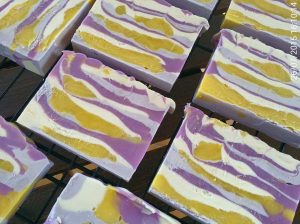
After meticulously obtaining the formula we are going to employ, we weigh and prepare the blend of oils while taking into account their characteristics and the properties we want to infuse the soap with.
We pour the oils into the caustic soda and water mixture, and we combine all three parts with an immersion blender until the emulsification gets to the right consistency. During or right after this process, we add the blend of essential oils and other additives, which can be plant-based, like dried flowers, seeds, and charcoal; or mineral, like clay or micas. When the blend of all components is ready, it’s finally poured into the mold and left to saponify for the following 24 to 48 hours. After this resting period, the soap is unmolded and cut into individual bars.
The bars are then left to cure in a well ventilated area for four to fix weeks, or until they are hard enough to use and their pH is lowered to 7 or 8.


* we use vegetable fats only. The palm oil in our soap is certified sustainable.
** we sometimes substitute the water in the soap for milk (either vegetable or animal milk), tea, or a honey infusion, or we add some pureed vegetable to it.